GPT Image 2.5 Sunburst
Create and edit images from text and image inputs. Choose Sunburst when editing precision matters most.
Read OpenAI’s Sunburst documentationTwo models, two creative priorities. Choose precise editing or fast everyday image generation.
Create and edit images from text and image inputs. Choose Sunburst when editing precision matters most.
Read OpenAI’s Sunburst documentationGenerate high-quality everyday images quickly. Flare accepts text and image inputs and produces image outputs.
Read OpenAI’s Flare documentationModel information checked against OpenAI’s official documentation on September 12, 2026.
Plan long-form AI video scene by scene. Map characters, storyboards, image-to-video shots, current models, sound, credits, and human quality gates before the final cut.

FREE CREATION STUDIO · NO SIGN-UP
Generate an image or video without leaving the homepage. Switch tools at any time; the selected generator loads in the full-height workspace below.
Loading the free image generator…
The full creative workspace will appear here.FEATURES & WORKFLOWS
Choose the path that matches what you want to make—brand definition, Magic Claw, story-to-video, long-form planning, or pricing.
Independent MagicLight AI review 2026 — worth a free test for long-form story/faceless? Measure credits on a full video.
Open the relevant guide →A source-linked definition of MagicLight as a long-form story video suite with characters, storyboards and finishing tools.
Open the relevant guide →Understand the conversational creation helper, how to brief it, and how it differs from a single-prompt clip generator.
Open the relevant guide →Plan multi-scene episodes carefully—treat ~50-minute marketing claims as vendor claims about assembled workflow.
Open the relevant guide →Turn narrative beats into a scene plan before spending credits on motion.
Open the relevant guide →Long-form 2026-09-17 notes on beat sheets, scene budgets and credit discipline.
Open the relevant guide →Separate trial access from paid credits and verify live checkout before budgeting an episode.
Open the relevant guide →Budget scenes, retries, sound and exports to estimate credits per approved story minute.
Open the relevant guide →Long-form product update coverage: scorecards, FAQ and honest aggregator positioning for 2026.
Open the relevant guide →POPULAR QUESTIONS
Worth a free test for story/faceless long-form drafts; measure credits on a full video before annual and verify billing terms.
Read the supporting page →MagicLight markets itself as an AI story-video suite for scripts, reusable characters, storyboards, scene generation and finishing. Confirm live modules on the official site.
Read the supporting page →Magic Claw is MagicLight’s conversational creation and publishing helper. Treat it as an orchestration path inside the suite, not a guarantee of publish-ready long video without review.
Read the supporting page →Write a beat sheet with approved characters first. Generate the hardest scene first and regenerate only the failing unit.
Read the supporting page →Official marketing has claimed finished videos up to about 50 minutes. Phrase that as a vendor claim about assembled multi-scene delivery—verify live and plan scene-by-scene quality.
Read the supporting page →MagicLight may offer limited free access and paid credit plans. Limits change—check the official pricing page before relying on a free workflow.
Read the supporting page →Count scenes, references, model tests, retries, voice, captions and exports, then divide by approved minutes and verify the live plan.
Read the supporting page →Features, access, and plan terms can change. Confirm important details on the official MagicLight website before starting a paid project. This is an independent guide pointing creators to Polox AI for a separate creation path. Brand names belong to their respective owners.
Production, not a magic button
Long-form generation becomes manageable when every expensive scene inherits clear decisions from the script, cast, and storyboard.
Define the promise, audience, facts, and visible beats.
Approve reusable characters and visual references.
Direct shots, motion, audio, and model tests.
Check continuity, credits, rights, and delivery.
Choose a production path
Turn narrative beats into a scene plan before rendering.
Open guide ↗BEATS → EPISODEBudget credits and continuity across a complete episode.
Open guide ↗FRAME → MOTIONProtect identity and geometry while adding motion.
Open guide ↗SHOT → MODELRoute each shot through a deliberate model test.
Open guide ↗CAST → REFERENCESBuild reference frames that support the moving story.
Open guide ↗CREDITS → COSTCalculate cost per approved minute, not per click.
Open guide ↗IMAGE & VIDEO MODEL GUIDES
Every model page separates developer facts, MagicLight availability, workflow recommendations, and unknowns.
Structured image generation for storyboards
Last checked August 27, 2026 →OpenAIImage generation and editing for storyboards
Last checked August 27, 2026 →ByteDance Seed30-second audio-video storytelling
Last checked August 24, 2026 →KuaishouMultimodal video and image model series
Last checked August 24, 2026 →Google DeepMindCinematic video with audio and references
Last checked August 24, 2026 →OpenAIHistorical video-and-audio model availability guide
Last checked August 24, 2026 →POPULAR MAGICLIGHT WORKFLOWS
PLAN AROUND APPROVED MINUTES
Compare plan limits against scene count, expected retries, model choice and delivery needs. Always verify the official checkout before paying.
Questions people ask about MagicLight
Use these direct answers to choose a safe login route, understand plan limits and plan a multi-scene video.
An AI story-video platform connecting scripts, reusable characters, storyboards, video models, voice, music, captions, editing, and publishing. This is an independent guide, not the official product.
Both. Official pages show limited free access and paid credit plans. Free does not mean unlimited; verify the live checkout because plan allowances can change.
MagicLight promotes finished story videos up to about 50 minutes. That is a multi-scene production workflow, not one uninterrupted generation. Plan shots, retries, credits, and continuity.
Use the official MagicLight domain and its links to Google Play or Apple's App Store. Avoid unofficial APK or modified-app downloads. Read the safety guide →
One script. Clear decisions. Better scenes.
MagicLight AI · CREATIVE WORKFLOW
A lighthouse mystery becomes manageable when it is divided into narrative beats: a signal appears, a character investigates, an object changes the interpretation and the ending resolves the question. Each beat needs a visible event. A sequence of attractive coastal images alone does not communicate those story changes.
Keep a continuity sheet for the lighthouse, character, important props and time of day. Build each AI video prompt around one event, then review whether the assembled scenes preserve the intended geography and chronology. Narration should clarify the story without explaining every detail already visible on screen.
Write the central question, major turning points and ending first. Break those into scenes with clear actions before expanding the visual style.
Scenes may share a style but lack causal links, consistent geography or recurring character details. Review the sequence as a story, then repair the specific missing connection.
THE CREATIVE NOTEBOOK
Explore a focused tutorial, a practical prompt guide and a real-world planning exercise. Each guide includes an original brief and a checklist for reviewing your result.

NEW CREATIVE GUIDE
A clockmaker and a lost season: explore two original concept images, prompts and a practical production brief.
Explore the MagicLight AI creative guide →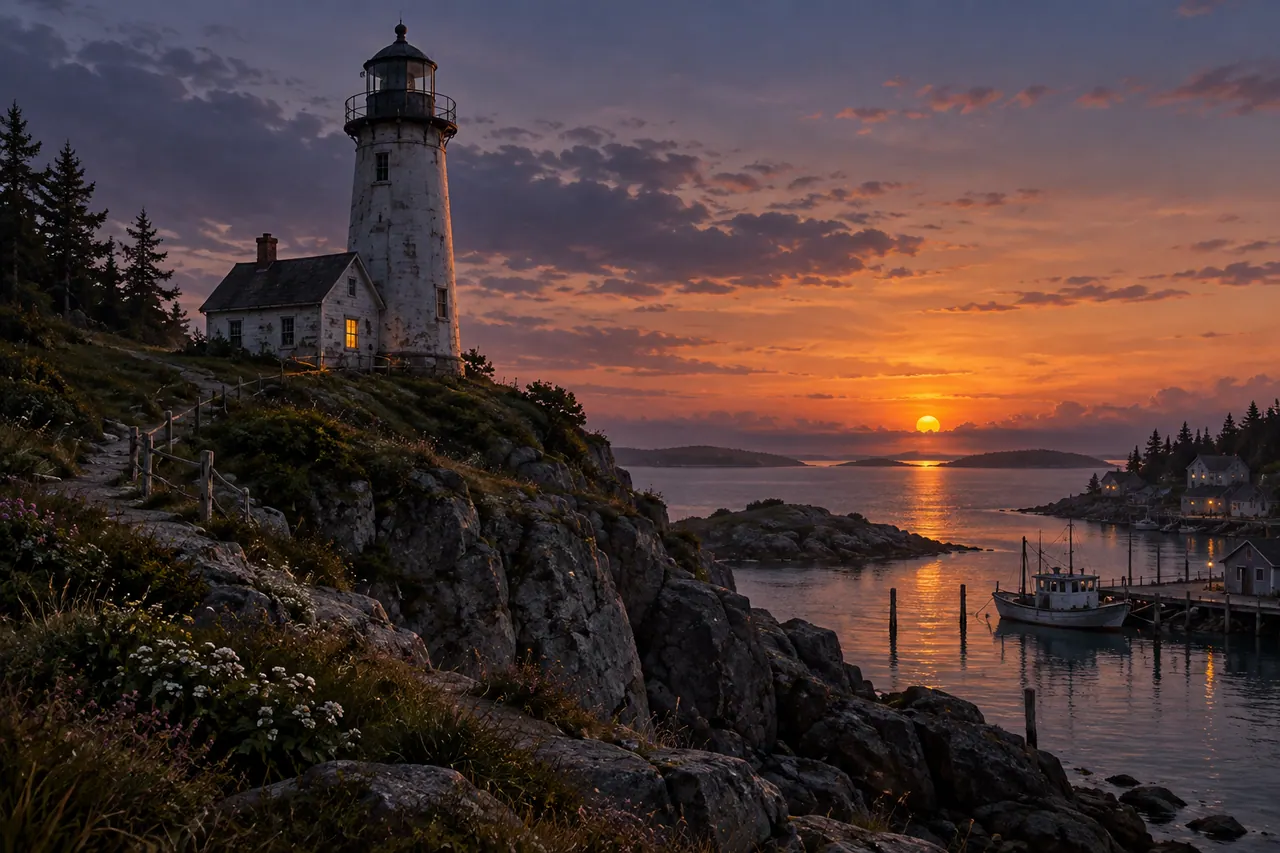
NEW IN THE JOURNAL
Build a MagicLight AI story workflow around a lighthouse mystery, covering beats, scenes, visual continuity, narration and editorial assembly.
Read the complete guide →